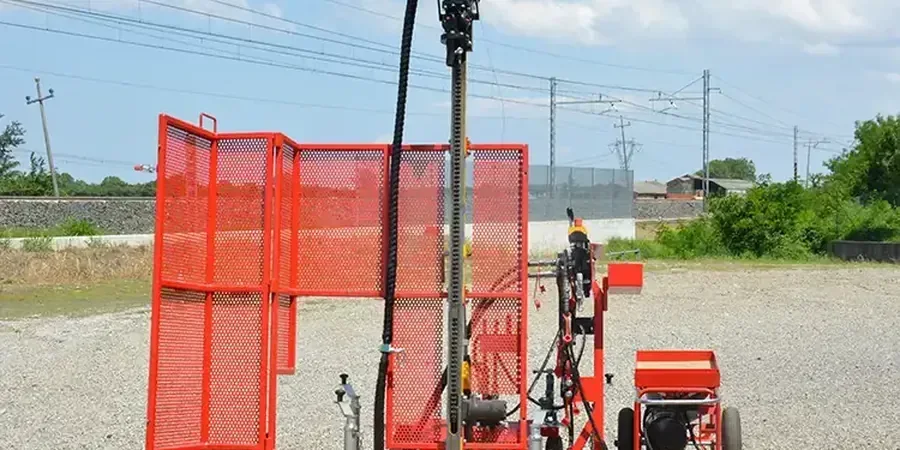
Geotechnical investigation in Eugene, Oregon, forms the critical first step in any construction or land development project, providing essential data about subsurface conditions that directly influence design, safety, and long-term performance. This category encompasses a comprehensive suite of exploration and testing methods aimed at characterizing soil, rock, and groundwater behavior beneath a site. In Eugene, where diverse geological formations and seismic considerations intersect, thorough investigation is not merely a best practice but a fundamental requirement for mitigating risks such as slope instability, liquefaction, and differential settlement. From residential additions to major infrastructure, understanding what lies beneath the surface protects investments and ensures structural integrity.
Eugene's location in the southern Willamette Valley presents a complex geological setting shaped by ancient Missoula Floods, volcanic activity from the Cascade Range, and ongoing tectonic processes. The area features thick deposits of alluvial silts and clays, often with interbedded sand and gravel lenses, overlying older sedimentary and volcanic bedrock. These valley floor sediments can exhibit variable bearing capacity and are susceptible to consolidation under load. The proximity to the Oregon Coast Range also introduces colluvial soils on hillsides, where ancient landslides and creep may be present. Furthermore, the Cascadia Subduction Zone poses a significant seismic hazard, making the evaluation of liquefaction potential in saturated granular soils a paramount concern during any investigation.
All geotechnical investigations in Eugene must adhere to the standards set forth by the Oregon Structural Specialty Code (OSSC), which adopts the International Building Code (IBC) with state-specific amendments. These regulations mandate site-specific studies for most structures, with particular emphasis on seismic design categories determined by proximity to active faults and soil profile types. The Oregon Department of Geology and Mineral Industries (DOGAMI) provides crucial hazard maps that guide the scope of investigations. A cornerstone of many subsurface explorations is the Cone Penetration Test (CPT), which offers continuous, high-resolution profiling of soil behavior, proving invaluable for liquefaction analysis and determining engineering parameters in the region's challenging soils without generating drill cuttings.
The demand for these investigations spans a wide range of projects, each with unique requirements. Critical infrastructure like the Eugene Airport and bridges over the Willamette River necessitate deep borings and advanced laboratory testing to ensure performance under seismic and flood loading. Commercial and multi-family developments on the valley floor rely heavily on investigations to design deep foundations that bypass compressible clays. Hillside residential projects require detailed slope stability analyses, while public works such as the City of Eugene's stormwater management facilities depend on infiltration testing and groundwater monitoring. Even smaller projects, like retaining walls exceeding a certain height or solar panel arrays, trigger the need for a geotechnical report to secure permits and satisfy regulatory demands.
A geotechnical investigation is generally required by the Oregon Structural Specialty Code for any new building, addition, or significant retaining structure. The scope is triggered by the project's seismic design category and the known variability of local soils, such as the compressible Willamette Valley silts. A report is typically mandatory before a city building permit can be issued to confirm that foundation and grading plans address site-specific conditions.
Investigations in Eugene primarily assess hazards from the Cascadia Subduction Zone, including strong ground shaking and soil liquefaction in saturated, sandy deposits. Other critical hazards include slope instability on hillsides, compressible and collapsible soils common in the valley floor alluvium, and potential flooding impacts on foundation scour and groundwater conditions.
The depth of exploration is dictated by the proposed structure's loads and footprint, but it must extend through any unsuitable soils into competent bearing strata. In Eugene's valley center, this often means penetrating 15 to 30 feet of soft alluvium to reach denser gravels or bedrock. For deep foundations or liquefaction studies, depths can exceed 60 feet to fully characterize the subsurface profile.
A standard soil boring retrieves physical samples for visual classification and laboratory testing, providing discrete data at intervals. A Cone Penetration Test (CPT) is a rapid, in-situ method that pushes an instrumented cone into the ground, producing a continuous profile of soil behavior, tip resistance, and pore pressure. In Eugene, CPT is particularly effective for identifying thin, liquefiable sand seams that traditional borings might miss.
We serve projects across Eugene Oregon and surrounding areas.