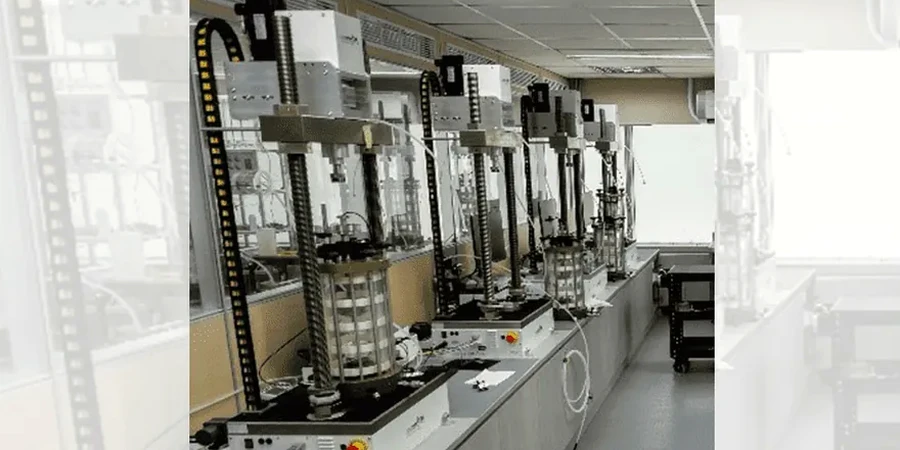
When a project site in Eugene sits on the Willamette Silt—that tan, low-plasticity loess that covers much of the southern valley floor—you learn quickly that undisturbed sampling is half the battle. The finer the silt, the more sensitive the structure. Our lab team runs consolidated-undrained triaxial tests with pore pressure measurement because that is what most local geotechnical reports demand when designing footings near the McKenzie River terraces. We also pair triaxial data with CPT correlations for sites where tube samples are difficult to recover, and with slope stability analysis when the project is up in the South Hills where colluvium overlies weathered basalt. The goal is simple: give the design engineer a Mohr-Coulomb envelope they can trust.
Effective stress parameters from a CU triaxial test are not just numbers—they are the difference between a footing that performs and one that settles differentially in Eugene’s layered alluvium.